Project M:25 is a nonprofit organization helping vulnerable children around the world go from surviving to thriving.
About Us
Help children in impoverished communities go from surviving to thriving
Project M:25 helps children in impoverished communities around the world heal from trauma, build resilience, and thrive.
No child should have to grow up without safety, dignity, or the opportunity to thrive.
Since Project M:25 was founded in 2012, we’ve been on a mission to help vulnerable children around the world thrive. Thanks to the help of our generous partners and supporters, we’re making serious progress.
With 14+ years of on-the-ground experience in Ecuador, and a proven, trauma-informed model developed alongside academic partners, M:25 knows how to help children heal, grow, and thrive.
Our Mission
To help vulnerable children build resilience through mentoring, practical tools, and holistic care.
Our Vision
To create a world where every child is safe, cared for, and equipped to thrive.

Our Impact Since 2012
16,052
Children receiving specialized support since Project M:25 was founded
3,071
Leaders equipped in THRIVE tools, actively training others
77
Communities stabilized and strengthened across Ecuador
3,735
Homes resourced with Scripture since founding
80+
Seminary interns trained at Agua Viva, now multiplying the work globally
Looking Ahead: Our Most Ambitious Goals Yet
5,000
leaders in the THRIVE Model™ — trained to carry this work into their own contexts

250
communities stabilized and strengthened across Latin America and beyond

NOT YOUR AVERAGE NONPROFIT
What Makes Us Unique?
Faith-based Principles
Our work is rooted in the love of Jesus Christ—bringing hope, identity, and restoration to children and families.
Holistic Model
We care for the whole child: physical needs, emotional health, relationships, and spiritual growth.
Evidence-based Approach
Our approach is grounded in research and developed in partnership with leading institutions. We use proven methods that lead to measurable outcomes and lasting change.
Trauma-informed
We recognize the deep impact of trauma and respond with care that promotes healing, safety, and trust. Everything we do is designed to help children build resilience and grow stronger from within.
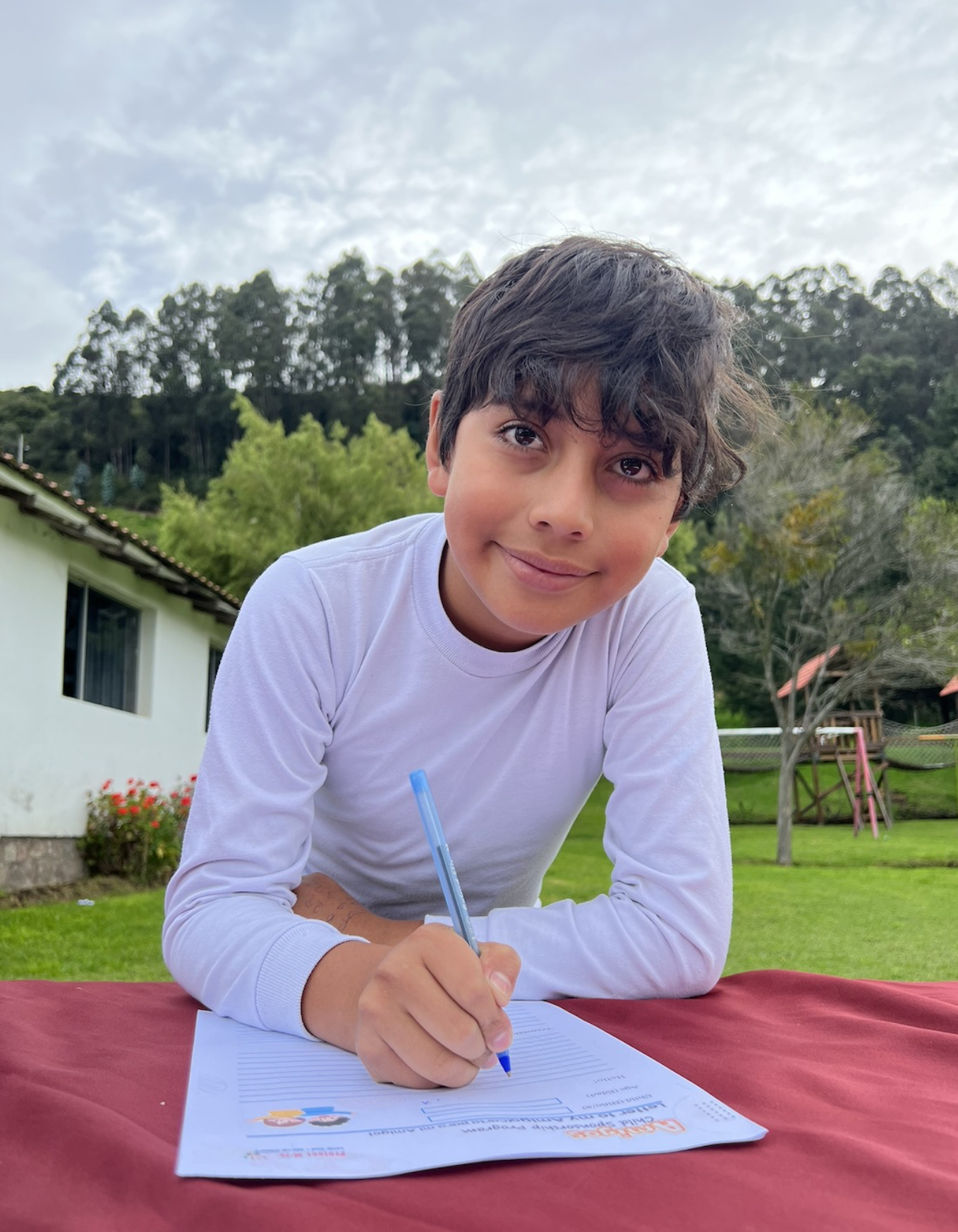
Committed to Serving with Excellence and Compassion

Motivated by our faith and guided by decades of experience, our team works tirelessly to equip leaders, empower families, and create lasting change for vulnerable children.

OUR PARTNERS
Multiplying the Impact Around the World
We’ve trained 471 churches, nonprofits, schools, ministries, and leaders around the world to implement the THRIVE Model. These partners are creating safe, healing environments where children and families can truly thrive.
Ready to help vulnerable children build a better future?
Every $40 can provide a child with the tools, resources, and care to build resilience.
Our Story
It started
with one yes.
How a machinist and a Sunday school teacher — and a community of people who kept saying yes — built a trauma-informed model that has reached more than sixteen thousand children.
Read the story↓Where it begins
Nobody would have guessed that a third-generation machinist and a lifelong Sunday school teacher would build a whole-child care model reaching thousands across Latin America. But that's how calling works. It rarely follows a predictable path — and it almost never arrives alone.
"Whatever, God."
Bobby Lynch grew up sweeping floors in his family's machine shop, third generation, expected to take the business over one day. Tamitha had been teaching Sunday school since she was twelve. When they married, Bobby likes to say, the whole church cried — because Tamitha was marrying "such a heathen."
Then came the twins. When they were about a year and a half old, a lump appeared on their daughter Jordan's back — an abnormal cluster of blood vessels behind her heart. One fall could burst it. Surgery was scheduled eight months out, to let her grow strong enough for anesthesia.
Driving home in a daze, Tamitha said, "Maybe we should just pray for a miracle." They prayed with the twins that night. The next morning at 7 a.m., Tamitha called Bobby at work: "It's smaller." The doctors confirmed it — and still wanted the surgery.
Something was shifting in Bobby. Their Sunday school class had been working through a simple idea: if you want to walk on water, you have to get out of the boat. It got under his skin. He fasted for three days. Then, alone in his room one Sunday night, unable to find the right words, he finally stopped trying to understand: "Whatever."
He describes it like the blinders lifting. One clear sentence: I have purposed your steps for this time, and you are to be trained to train others. He came out of that bedroom a red-faced, splotchy, bawling mess, found Tamitha on the couch, and told her.
She didn't pause. She didn't ask for time to think. "I know. Let's go."
The next morning — 7 a.m. again — Tamitha called a second time: "It's gone." The lump, roughly the size of a golf ball, had vanished. The doctors said they didn't know what happened. Bobby and Tamitha did: "We know what happened. We prayed."
"I know. Let's go."
Sell Everything
Within months, Bobby stepped out of the family machine shop for good. They sold the house. The bass boat. The four-wheel-drive pickup. The artwork. Everything. Then they loaded up their two three-year-old twins and moved into one of the hardest neighborhoods in Atlanta.
For five years, Bobby and Tamitha served as inner-city missionaries — much of it alongside City of Refuge, the Atlanta ministry that has since grown into one of the city's largest nonprofits. Its founding conviction — trust people first, restore dignity, and let change happen through relationships — was the same soil the Lynches were being formed in.
It was their formation ground. Where good intentions met the real complexity of human need. Where Tamitha's gift with children deepened into something more than classroom technique. And where Bobby learned the principle that still anchors everything: every program, every act of service, has to begin with relationship.
We connect before we correct. It started here.
During those years, Bobby also earned his Master of Divinity in Missions and Evangelism. The word from that bedroom was being answered one semester, one family at a time. Neither of them had a plan for Ecuador — but nothing they learned in Atlanta would be wasted.
Following the Open Door
After five years in Atlanta, Bobby and Tamitha felt a clear pull toward a developing country — somewhere poverty, spiritual need, and practical ministry would meet in the same place. The door to Ecuador opened. They walked through it.
In 2007 they moved to Quito, where Bobby began teaching at SEMISUD, one of Latin America's leading seminaries, equipping pastors and ministry leaders from across the region. Tamitha kept building relationships with children and families. Two callings, side by side — not yet one model, but moving in the same direction.
Bobby describes the certainty of that season simply: "There was no doubting. That's what we were supposed to do. Which is a rare thing — to have that kind of confirmation."
In those early days of learning a new country and a new language, certain people arrived who turned out to be far more than neighbors. For Bobby and Tamitha, that was Dr. Juan Francisco — a doctor who, crucially, spoke English when they were still finding their footing in Spanish. That was the first gift. Over the years, he and his wife, Sophie Moncayo, would show up in exactly the moments they were needed most.
Tamitha had no idea any of that was coming the afternoon she sent Sophie a message on Facebook.
The Neighborhood That Arrived with Pitchforks
In 2012, an unplanned opportunity surfaced: a 2.5-acre campus on a hillside outside Quito, at 9,500 feet — houses, a chapel, and room to grow. Bobby and Tamitha moved on it. They named it Agua Viva — Living Water.
What started as an after-school program quickly drew 30 to 40 children every single day. The surrounding community was urban on paper but carried the deep marks of rural poverty. From the start, the operating principle was dignity — never pity.
The community didn't welcome them at first. One day, locals arrived at the campus gate with pitchforks, machetes, and sticks, threatening violence and demanding the missionaries leave. The resistance was real, and it was frightening.
Bobby and Tamitha stayed.
The breakthrough came slowly — through presence, solidarity, and practical help offered without conditions. They served meals. They went to the homes of the very families who had threatened them. They sat with the same parents week after week. They didn't preach at people who weren't ready. They prayed quietly, served openly, and stayed.
Over time, the same mothers who had once arrived with threats began offering to cook lunch for the children. Skeptics became advocates. The kids who used to dart away from the gate began arriving early, asking if they could come in.
And on that hillside, Bobby's calling to train leaders and Tamitha's calling to care for children finally became one model.
Trust is earned slowly. They stayed long enough to let it be earned.
500 Cupcakes
Agua Viva was barely in its second year when Tamitha spotted Sophie's posts about a cupcake business — and had one of her characteristically ambitious ideas. The team was planning a big event: 500 children from the community, all on campus. Tamitha wanted every one of them to have something beautiful and unexpected — a real American-style cupcake, thick frosting and all. Something most of these kids had never tasted.
She barely knew Sophie. She was still navigating the language gap. She reached out anyway and explained what she was hoping for.
Sure, Sophie said. How many do you need?
Five hundred.
There was probably a pause. But Sophie is not someone who lets a pause become a no. "No problem."
She showed up with a carload of 500 cupcakes — and walked into something she wasn't expecting. Green grass, children running and laughing, the Andes rising behind it all, under the particular blue sky Ecuador seems to have every single day. The campus stops people. It stopped her.
It's hard to say when Sophie went from the woman who delivered cupcakes to simply part of the family. It happened the way most important things do — gradually, then all at once. A cooking class where Tamitha wanted to teach kids who'd never eaten pizza how to make it; Sophie said "no problem" again. The events, the afternoons that turned into evenings. At some point, nobody wanted her to leave.
What Tamitha and Sophie discovered is that they share a particular affliction: they both have grand ideas that seem slightly unreasonable until they work. Over the years, that dynamic has produced some of the most meaningful things Project M:25 has ever done.
Agua Viva was never going to be built by two people. It's built by everyone who says yes — the small yeses, the inconvenient yeses, the "I'll figure it out" yeses. Dozens of interns have trained on that hillside and carried the work home to their own communities.
Learn, practice, return, replicate.
A Framework Born in the Field
For years, Tamitha watched children arrive at Agua Viva carrying invisible weight. Programs could feed them. Curriculum could teach them. But something wasn't reaching the place where the wound actually lived.
It was a specific child — a little girl the team calls Evelyn — whose story made it undeniable. Good intentions and practical help were not enough on their own, not without understanding how trauma shapes the way children develop, relate, and trust. Something more was needed.
So Tamitha enrolled in the Master of Science in Holistic Child Development at Lee University — a program Bobby was helping coordinate through the Quito seminary. Sophie enrolled alongside her. So did Keren Cortes, who had become vital to the campus and would go on to direct its activities.
What came out of those years — the research, the late-night conversations, and the daily practice of applying everything to real children on a real hillside — became the THRIVE Model™: a whole-person framework built around four connected domains — physical, mental and emotional, relational, and spiritual health — delivered through a trauma-informed approach that puts safety, trust, and dignity before anything else.
It wasn't designed in a classroom. It was forged in relationships with children who needed something that actually worked. As Tamitha puts it: "The heart of children's ministry isn't giving a lesson in the most creative way. It's building meaningful relationships so that vulnerable children trust what I say."
Sophie understood that before she had a framework to name it. She'd been living it since the day she walked onto campus with 500 cupcakes.
Connection is the classroom.
When the Ground Shook
In April 2016, a 7.8-magnitude earthquake struck Ecuador's coast. Nearly 2,000 people died. Tens of thousands lost their homes.
Project M:25 responded — and for the first time, in partnership with Lee University. A team came down with Dr. Heather Quagliana, who toughed out the hot, dusty conditions of a broken coastline alongside Bobby and Tamitha. They brought care packs and toys, but mostly something harder to see: teaching for pastors, teachers, and parents on how to help children move through what they'd just survived. How to name the fear. How to sit with the grief. How not to rush a child past what her body still remembers.
Something clicked on that coast — the conviction that faith and trauma-informed care were never meant to live in separate rooms. The partnership that began in the rubble would shape both Lee University and Project M:25 for years.
Sophie had to sit that campaign out; she was about to give birth. But she tracked everything and stepped back in as soon as she could. Later, when her husband was offered an opportunity in Chile, the family relocated — and it is remarkable how completely Sophie remains woven into everything at Agua Viva. She knows. She tracks. She directs every program. Based in Chile, present everywhere.
That is what a model that scales actually looks like. Not a brochure. People. The intern who once arrived unsure of herself flies home and trains others. The neighborhood that once came with threats now sends its mothers to cook. And the THRIVE Model™ is now trained to organizations well beyond Ecuador.
The fruit of one yes
What those yeses have produced
Seen, Safe, Loved.
"Does this help a child feel seen, safe, and loved?"
This story didn't begin with an organization. It began with a surrender — and it kept going because ordinary people kept saying yes. Because of partners like you, the doors stay open, the kitchen stays full, and leaders keep going home to start it all again.
Become a Thrive Partner — $25/month Or plan a visit and walk the campusPreparing People to Thrive.